
Prologue
Science vs. Basic Educational Research
2003
Since its inception, basic educational research has drawn conclusions that go far beyond the evidence and have used methods that are, at best, arrogant. The system is self-propagating largely because the researchers lack detailed information about teaching. They don't understand what may be achieved with a group of at-risk first graders, or failed tenth graders. Therefore, they have no sounding board that gives them a sense of reality. The absence of knowledge of specifics is perhaps most fervently fermented in Phi Delta Kappan,where apparent literate people make sterile comments about training teachers, orchestrating a whole-school implementation, or figuring out how to solve specific instructional problems.
The naiveté about teaching also characterizes those who advocate some good changes in education. For example, the reading initiatives between 2000 2005 had sensible components because they are based on research for specific approaches; however, initiatives also drew conclusions that nullified the good by “promoting” inferior instructional programs and approaches.
"Science versus Basic Educational Research" articulates the more serious flaws in the logic that characterizes the field. The article, "The Dalmatian and Its Spots; Why Research-Based Recommendations Fail Logic 101," deals with some of the flaws and does so in a more readable manner than the science paper does. What the science paper adds is a section about the designs of studies that attempt to generate information about some instructional component like phonemic awareness, phonics, decodable texts, etc. The paper points out that the most relevant type of design would be one that fully implements a highly successful program, records times and student mastery. Then specific details of the program are changed and the difference in performance (if any) is noted. I think it is very revealing that this design has never (to the best of my knowledge) been used in research. In fact, the more common design uses a comparison group that does something quite poor, so even though the experimental treatment may be mediocre, it will shine by comparison.
Featured Video
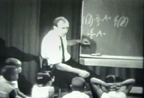
Kindergarteners Showing Off Their Math Skills 1966 Uncut demonstration of at-risk children who were taught math by Zig Engelmann as four year olds and five year olds. The session was filmed in front of a class of college students in August with no rehearsal. Children work addition, subtraction, multiplication, division problems, basic algebra problems, fraction problems, area problems, factoring, and simple simultaneous equations.
Watercolors by Zig

Picture of the Month
February
Deer in the Oregon Cascades
(Broken Top)
Featured Video
Kindergarteners Showing Off Their Math Skills 1966 Uncut demonstration of at-risk children who were taught math by Zig Engelmann as four year olds and five year olds. The session was filmed in front of a class of college students in August with no rehearsal. Children work addition, subtraction, multiplication, division problems, basic algebra problems, fraction problems, area problems, factoring, and simple simultaneous equations.